

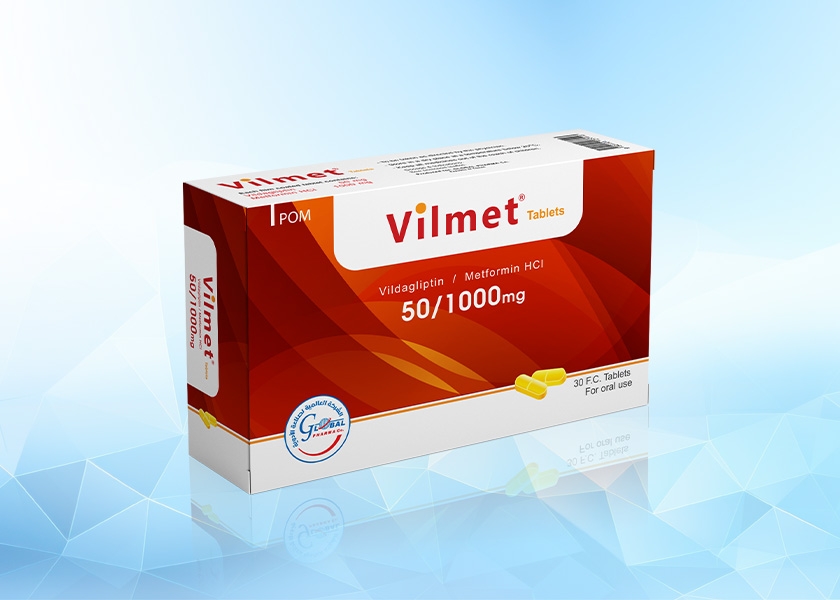

Indication
Vilmet is used to treat adult patients with type 2 diabetes. This type of diabetes is also known as non-insulin-dependent diabetes mellitus. Vilmet is used when
diabetes cannot be controlled by diet and exercise alone and/or with other medicines used to treat diabetes.

Composition
- Each film coated tablet of Vilmet 50 mg/500 mg contains: Vildagliptin 50 mg
Metformin hydrochloride 500 mg
- Each film coated tablet of Vilmet 50 mg/850 mg contains: Vildagliptin 50 mg
Metformin hydrochloride 850 mg
- Each film coated tablet of Vilmet 50 mg/1000 mg contains: Vildagliptin 50 mg
Metformin hydrochloride 1000 mg

Dosage
- Always take this medicine exactly as your doctor has told you, Check with your
doctor if you are not sure.
The amount of Vilmet that people have to take varies depending on their condition. The recommended dose is one film-coated tablet of either 50 mg/850 mg or 50
mg/1000 mg taken twice a day.
If you have reduced kidney function, your doctor may prescribe a lower dose.
Also if you are taking an anti-diabetic medicine known as a sulphonylurea your
doctor may prescribe a lower dose.
Your doctor may prescribe this medicine alone or with certain other medicines that lower the level of sugar in your blood.
- Vilmet contains two active substances Vildagliptin and Metformin, belong to a group of medicines called “oral antidiabetics”.
Both active substances, vildagliptin and metformin, help to control the level of sugar in the blood. The substance vildagliptin works by making the pancreas produce more insulin and less glucagon. The substance metformin works by helping the body to make better use of insulin. This medicine has been shown to reduce blood sugar,
which may help to prevent complications from your diabetes
- Each film coated tablet of Vilmet 50 mg/500 mg contains: Vildagliptin 50 mg
Metformin hydrochloride 500 mg
- Each film coated tablet of Vilmet 50 mg/850 mg contains: Vildagliptin 50 mg
Metformin hydrochloride 850 mg
- Each film coated tablet of Vilmet 50 mg/1000 mg contains: Vildagliptin 50 mg
Metformin hydrochloride 1000 mg
Vilmet is used to treat adult patients with type 2 diabetes. This type of diabetes is also known as non-insulin-dependent diabetes mellitus. Vilmet is used when
diabetes cannot be controlled by diet and exercise alone and/or with other medicines used to treat diabetes.
Vilmet® tablets are contrainticated in:-
- if you are allergic (hypersensitive) to vildagliptin, metformin or any of the other
ingredients of this medicine .
- if you have uncontrolled diabetes, with, for example, severe hyperglycaemia (high blood glucose), nausea, vomiting, diarrhoea, rapid weight loss, lactic acidosis or
ketoacidosis. Ketoacidosis is a condition in which substances called ketone bodies accumulate in the blood and which can lead to diabetic pre-coma. Symptoms include stomach pain, fast and deep breathing, sleepiness or your breath developing an
unusual fruity smell.
- if you have recently had a heart attack or if you have heart failure or serious
problems with your blood circulation or difficulties in breathing which could be a
sign of heart problems.
- if you have severely reduced kidney function.
- if you have a severe infection or are seriously dehydrated (have lost a lot of water
from your body).
- if you are going to have a contrast x-ray (a specific type of x-ray involving an
injectable dye).
- if you have liver problems.
- if you drink alcohol excessively .
- if you are breast-feeding .
Tell your doctor if you are taking, have recently taken or might take any other
medicines. You may need more frequent blood glucose and kidney function tests, or
®your doctor may need to adjust the dosage of Vilmet .
It is especially important to mention to your doctor if you take the following:
- Glucocorticoids generally used to treat inflammation
- Beta-2 agonists generally used to treat respiratory disorders
- Other medicines used to treat diabetes
- Medicines which increase urine production (diuretics)
- Medicines used to treat pain and inflammation (NSAID and COX-2-inhibitors, such as ibuprofen and celecoxib)
- Certain medicines for the treatment of high blood pressure (ACE inhibitors and angiotensin II receptor antagonists)
- If you are pregnant, think you may be pregnant or are planning to have a baby, ask your doctor for advice before taking this medicine. Your doctor will discuss with you
the potential risk of taking Vilmet® during pregnancy.
- Do not use Vilmet if you are pregnant or breast-feeding
Like all medicines, this medicine can cause side effects, although not everybody gets them.
You should stop taking Vilmet® and see your doctor immediately if you experience the following side effects:
- Lactic acidosis (very rare: may affect up to1 user in 10,000):
Vilmet® may cause a very rare, but very serious side effect called lactic acidosis.
- Angioedema (rare: may affect up to 1 in 1,000 people): Symptoms include swollen face, tongue or throat, difficulty swallowing, difficulty breathing, sudden onset of rash or hives.
- Liver disease (hepatitis) (rare): Symptoms include yellow skin and eyes, nausea, loss of appetite or dark-coloured urine.
- Inflammation of the pancreas (pancreatitis) (frequency not known): Symptoms include severe and persistent pain in the abdomen (stomach area), which might reach through to your back, as well as nausea and vomiting.
Some patients have experienced the following side effects while taking Vilmet
- Always take this medicine exactly as your doctor has told you, Check with your
doctor if you are not sure.
The amount of Vilmet that people have to take varies depending on their condition. The recommended dose is one film-coated tablet of either 50 mg/850 mg or 50
mg/1000 mg taken twice a day.
If you have reduced kidney function, your doctor may prescribe a lower dose.
Also if you are taking an anti-diabetic medicine known as a sulphonylurea your
doctor may prescribe a lower dose.
Your doctor may prescribe this medicine alone or with certain other medicines that lower the level of sugar in your blood.
Risk of lactic acidosis:
Vilmet® may cause a very rare, but very serious side effect called lactic acidosis,
particularly if your kidneys are not working properly. The risk of developing lactic acidosis is also increased with uncontrolled diabetes, serious infections, prolonged fasting or alcohol intake, dehydration , liver problems and any medical conditions in which a part of the body has a reduced supply of oxygen (such as acute severe heart diseases).
If any of the above apply to you, talk to your doctor for further instructions.
Stop taking Vilmet® for a short time if you have a condition that may be associated with dehydration (significant loss of body fluids) such as severe vomiting, diarrhoea, fever, exposure to heat or if you drink less fluid than normal.
Stop taking Vilmet® and contact a doctor or the nearest hospital immediately if you experience some of the symptoms of lactic acidosis, as this condition may lead to coma.Symptoms of lactic acidosis include:
vomiting , stomach ache (abdominal pain),muscle cramps, a general feeling of not being well with severe tiredness,difficulty in breathing and reduced body
temperature
and heartbeat.
A test to determine your liver function will be performed before the start of Vilmet® treatment, at three-month intervals for the first year and periodically thereafter. This is so those signs of increased liver enzymes can be detected as early as possible. During treatment with Vilmet® , your doctor will check your kidney function at least
once a year or more frequently if you are elderly and/or have worsening renal
function.
- Vilmet® 50 mg/500 mg tablets: (Blister of 10 Tablets, Pack of 3 blisters).
- Vilmet 50 mg/850 mg tablets: (Blister of 5 Tablets, Pack of 4 blisters).
®
- Vilmet 50 mg/1000 mg tablets: (Blister of 10 Tablets, Pack of 3 blisters)
- Vilmet® tablets store in a dry place at a temperature not exceeding 25°C.